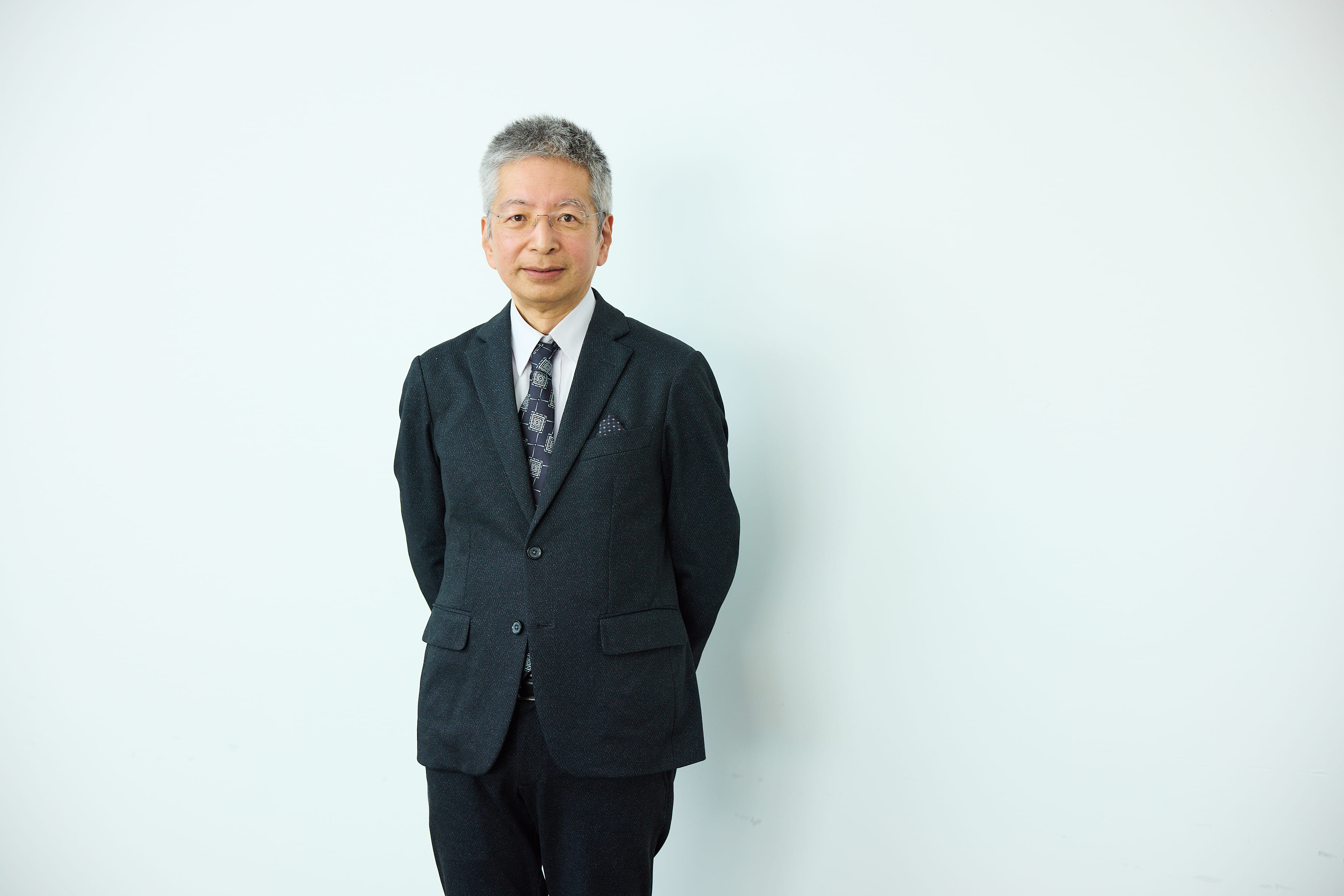
⚫︎Assuming Things Will Not Always Go as Planned
— You moved from traditional economics to behavioral economics. What led to that transition?
Ohtake: As I delved deeper into traditional economics, I came to realize that while it can explain broad patterns in society reasonably well, there are many aspects of human behavior that it cannot fully account for. Traditional economics is built on the assumption of competitive markets. Consequently, it focuses on observing those who succeed in competition, on the premise that their behavior explains how economic systems function. For understanding large-scale economic movements, this perspective is often quite useful. Looking at rational individuals who succeed in competitive markets can indeed help explain how those markets operate. However, it tells us much less about the vast majority of people who do not emerge as winners, or about behavior within households, workplaces, and other environments that do not function as competitive markets. Behavioral economics, by contrast, starts from the premise that most people have limited cognitive capacity and are influenced by various biases. I found this framework highly persuasive. By studying actual human behavior, behavioral economics can offer practical guidance on how to design better systems and make better decisions. That practical dimension is one of its greatest strengths. Traditional economics, on the other hand, rarely attempted to provide advice to individual people or organizations.
— Would it be fair to say that one attraction of behavioral economics was its ability to translate theory into practical advice?
Ohtake: Traditional economics is based on the assumption that people always choose the best available option. Individuals who consistently make optimal choices are presumed to gather all necessary information and act accordingly. If that assumption holds, there is little need for anyone else to provide guidance.
Behavioral economics takes a different view. It assumes that people genuinely try to make the best decisions but do not always succeed. This does not mean people fail all the time; rather, there are situations in which they systematically struggle to act in their own best interests. Once we accept that premise, the next question becomes: why do these failures occur? As researchers investigated that question, they found recurring patterns in the situations where people tend to make poor decisions. At the center of many of those patterns are cognitive biases.
⚫︎How Biases Distort Our Judgments
— By biases, you mean the unconscious distortions and tendencies in thinking and decision-making that you discussed in the first installment.
Ohtake: Exactly. Last time, I explained present bias. Put simply, it is the tendency to prioritize immediate rewards even when we know that a different course of action would be better for us in the long run. To be slightly more technical, people tend to discount future value while placing disproportionate weight on present value. For example, imagine being asked to choose between receiving ¥10,000 one year from now or ¥10,100 one year and one week from now. Most people would choose ¥10,100. When both rewards are sufficiently far in the future, people can make relatively patient decisions. However, if the choice is between receiving ¥10,000 today or ¥10,100 one week from now, most people choose the immediate ¥10,000. The additional ¥100 is outweighed by the appeal of receiving the reward right away. This illustrates how people's preferences change depending on when the decision takes effect. We may be patient when thinking about events a year away, yet become impatient when confronted with an immediate choice. Consider summer vacation homework. Before the vacation begins, many students plan to finish it early. Once vacation actually starts, however, they procrastinate and end up doing most of the work at the last minute. That is a classic example of present bias.
— Present bias certainly seems familiar to most people. What other kinds of biases are common?
Ohtake: Another well-known example is reference dependence, in which our satisfaction and decisions depend heavily on what we compare ourselves against. Consider the Olympic medal ceremony. It is not uncommon to see silver medalists looking disappointed while bronze medalists appear delighted. At first glance, this seems puzzling. One would expect a silver medalist to be happier than someone who finished third. The reason lies in their reference points. Bronze medalists often compare themselves with the possibility of leaving without a medal at all. Relative to that outcome, winning a bronze medal feels like a great success. Silver medalists, however, tend to compare themselves with the possibility of winning gold. Because they came so close to first place, they focus on what they narrowly missed, leading to disappointment rather than satisfaction.
— Rationally speaking, silver medalists should still be pleased with their achievement.
Ohtake: In reality, making perfectly rational decisions is far from easy. Another example of irrational thinking is what economists call the sunk cost fallacy. A sunk cost is a cost that has already been incurred and cannot be recovered. Imagine that you buy a ticket to a highly anticipated movie. Shortly after it begins, you realize that it is clearly not enjoyable. What would most people do? Would they leave the theater and spend their time on something else, or would they stay because they had already paid for the ticket? If the movie lasts two hours, the real decision concerns how best to use those next two hours. The ticket money is already gone regardless of what you do. Rather than wasting both the ticket price and two hours of your time, it may be better to leave and do something more worthwhile. The ticket price is the sunk cost. Because it cannot be changed by any future action, rational decision-making requires us to focus only on factors that can still be influenced going forward.
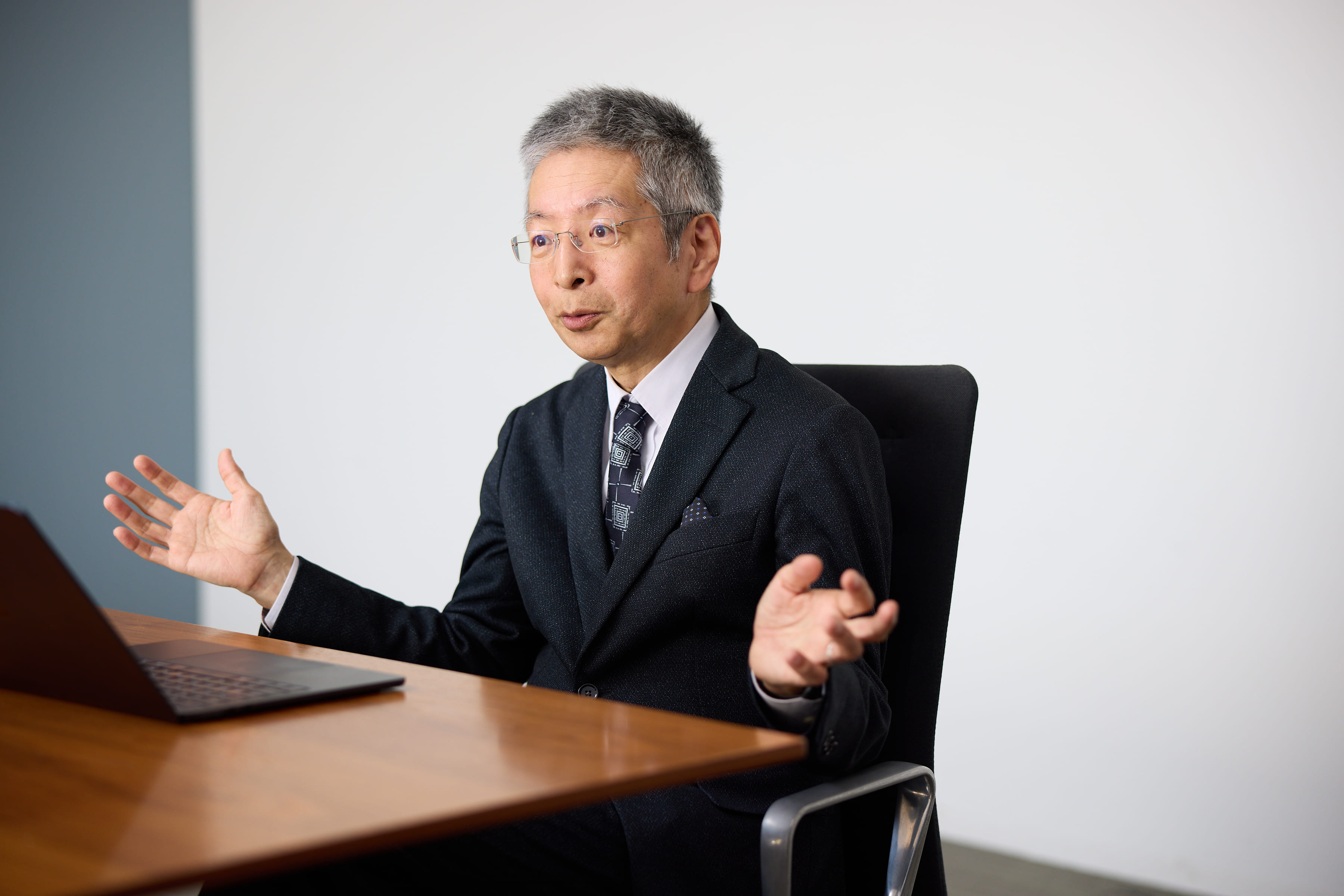
⚫︎Recognizing Biases and Using Them to Our Advantage
— Many of us make decisions and take action without giving them much thought. Listening to these examples, it seems likely that we sometimes end up acting against our own interests without realizing it.
Ohtake: There are many other situations in which our preference for certainty can lead us astray. Suppose the probability of success in a particular endeavor is 99.9 percent. Traditional economics would regard that outcome as virtually certain. In reality, however, people do not perceive it that way. Most individuals respond differently to a situation that is absolutely guaranteed and one that carries even a tiny degree of risk. Take dieting as an example. Even if you work hard today, there is no guarantee that you will immediately see results. That uncertainty often makes it difficult to stay motivated. This is where real-time feedback becomes important. In the workplace, for instance, when an employee is visibly making an effort to complete a task, a simple comment from a supervisor—something as straightforward as “You’re doing a great job”—can significantly boost motivation.
— It also seems that creating rules for ourselves can be an effective way to improve decision-making.
Ohtake: Because people are subject to biases, we often make less-than-optimal decisions without realizing it. For matters that are not especially important, I believe it is useful to establish rules in advance. A rule is something we follow unless there is a compelling reason not to. People generally find it easier to stick with defaults and prefer maintaining the status quo. Even in companies that use flexible seating arrangements, most employees tend to sit in the same place every day. The status quo bias is remarkably powerful. The key is to make constructive use of that tendency. In fact, before I became involved in behavioral economics, I considered rigid rules to be one of the worst possible approaches. My reasoning was that circumstances change constantly, so the best course of action is to make an optimal decision based on the specific situation at hand. If cognitive resources were unlimited, that might be true. We could carefully analyze every situation and select the best option each time. Unfortunately, human cognitive resources are limited. That is why it is often better to establish rules in advance, reducing the need to spend mental energy on unnecessary decisions.
— If we stop and deliberate over every decision, that process itself requires time and mental effort.
Ohtake: That is certainly true. In fact, when time is limited, it is almost impossible to arrive at the best possible decision. During the COVID-19 pandemic, I served as a member of a government advisory panel. It was an emergency situation, and we had to develop countermeasures quickly. Every member contributed their best ideas and worked extremely hard, but whether our decisions were truly optimal is another question. Looking back, it is clear that there were things we overlooked. Put simply, when people are suddenly asked to produce the best possible ideas under severe time constraints, it is extraordinarily difficult. Of course, anticipating emergencies in advance is also a challenging task. Nevertheless, without prior preparation, it becomes even harder to make the best decisions when a crisis actually occurs. It is simply impossible to devote all of our cognitive resources to every issue at all times. That is why I believe it is best to establish rules wherever possible, preserve mental space, and focus our attention on the issues that truly matter. This is precisely why detailed action plans for infectious disease control are developed in advance. However, as soon as it appeared that certain aspects of those plans no longer perfectly matched reality, there was a tendency to abandon them and attempt to design new optimal solutions from scratch. The problem was that, in the midst of an emergency, there was simply no time to carefully consider every possible option. Moreover, the more urgent the situation becomes, the more susceptible people are to various decision-making biases.
⚫︎Using Nudges to Support Our Own Choices
— Speaking of concentration, isn't one of today's challenges simply that we are exposed to too much information?
Ohtake: I believe that is exactly why so many people unknowingly exhaust their cognitive resources. At work, many people must process a constant stream of emails and messages every day. Simply reading and responding to them creates a considerable cognitive burden. Outside of work, people spend time on social media and short-form videos. Although the level of concentration may not be as intense as during work, these activities still consume mental resources. Unless we consciously manage our attention, our limited cognitive capacity can easily become depleted. That is the reality many of us face today.
— How can we reduce this unnecessary drain on cognitive resources and make better decisions?
Ohtake: The most effective approach is to create plans voluntarily when you have sufficient time, rather than waiting until circumstances force a decision upon you. Ideally, those plans should be highly specific. For example, when encouraging a child to study, it is far more effective to say, “Let's complete pages 10 through 15 of the math workbook during the next thirty minutes,” than simply telling them to study. With a concrete goal, the child can focus entirely on the task without having to decide what to do next. The same principle applies to adults. If you create a detailed plan for yourself, you can move smoothly from one task to another once you get started. It is also important to make progress visible. When a task is completed, it should be clear that a meaningful step has been achieved. Behavioral economics includes a concept known as the goal-gradient effect. People become increasingly motivated as they approach a goal. If individuals can clearly see how much closer they have moved toward achieving their objective, they are more likely to stay engaged and ultimately succeed.
— In that regard, it seems that systems such as Mental Battery and Mentoring 2 could benefit from the goal-gradient effect as well.
Ohtake: I believe so. Because Mental Battery and Mentoring 2 allow users to monitor their condition numerically, they can be used to support progress toward self-defined goals. The principle is similar to my own practice of displaying my heart rate in real time while cycling. One important point, however, is that the goals should not feel imposed from the outside. People need to feel that they chose the goals themselves. A situation in which people are forced to act is not a nudge. A nudge is a gentle prompt that encourages voluntary action. For that reason, it is helpful to provide multiple options and allow individuals to choose among them. Once they begin using the system, real-time feedback and visible progress indicators can reinforce their efforts. I believe such mechanisms have significant potential to increase motivation.
⚫︎Small Systems That Create Mental Space
Present bias, reference dependence, and the sunk cost fallacy—these and many other biases quietly shape our judgments in everyday life. Yet rather than viewing them as flaws to be lamented, Professor Ohtake argues that we should accept them as part of human nature. By creating rules, setting detailed goals, and designing environments that conserve cognitive resources, we can free ourselves from countless unnecessary decisions and create more room in our minds for what truly matters. Choosing for ourselves and moving forward at our own pace—perhaps it is through these small, intentional steps that a richer and more fulfilling life is ultimately built.
Profile
Fumio Ohtake (Specially Appointed Professor, Center for Infectious Disease Education and Research, Osaka University)
After graduating from the Faculty of Economics at Kyoto University, he proceeded to the Graduate School of Economics at Osaka University and earned his Ph.D. in Economics. He served as a Research Associate in the Faculty of Economics at Osaka University, Professor at the Institute of Social and Economic Research at the same university, and Professor in the Graduate School of Economics, before assuming his current position in 2021. His awards include the Japan Academy Prize, the Suntory Prize for Social Sciences and Humanities, and the Nikkei Prize for Excellent Books in Economic Science.
His fields of specialization are behavioral economics and labor economics. He is engaged in marketing research and the creation of nudge-based messaging for government and corporations, as well as consulting and advisory work that applies behavioral economics.