⚫︎What Does It Mean to Be Mentally Fulfilled?
— To begin, how would you define a state of mental fulfillment?
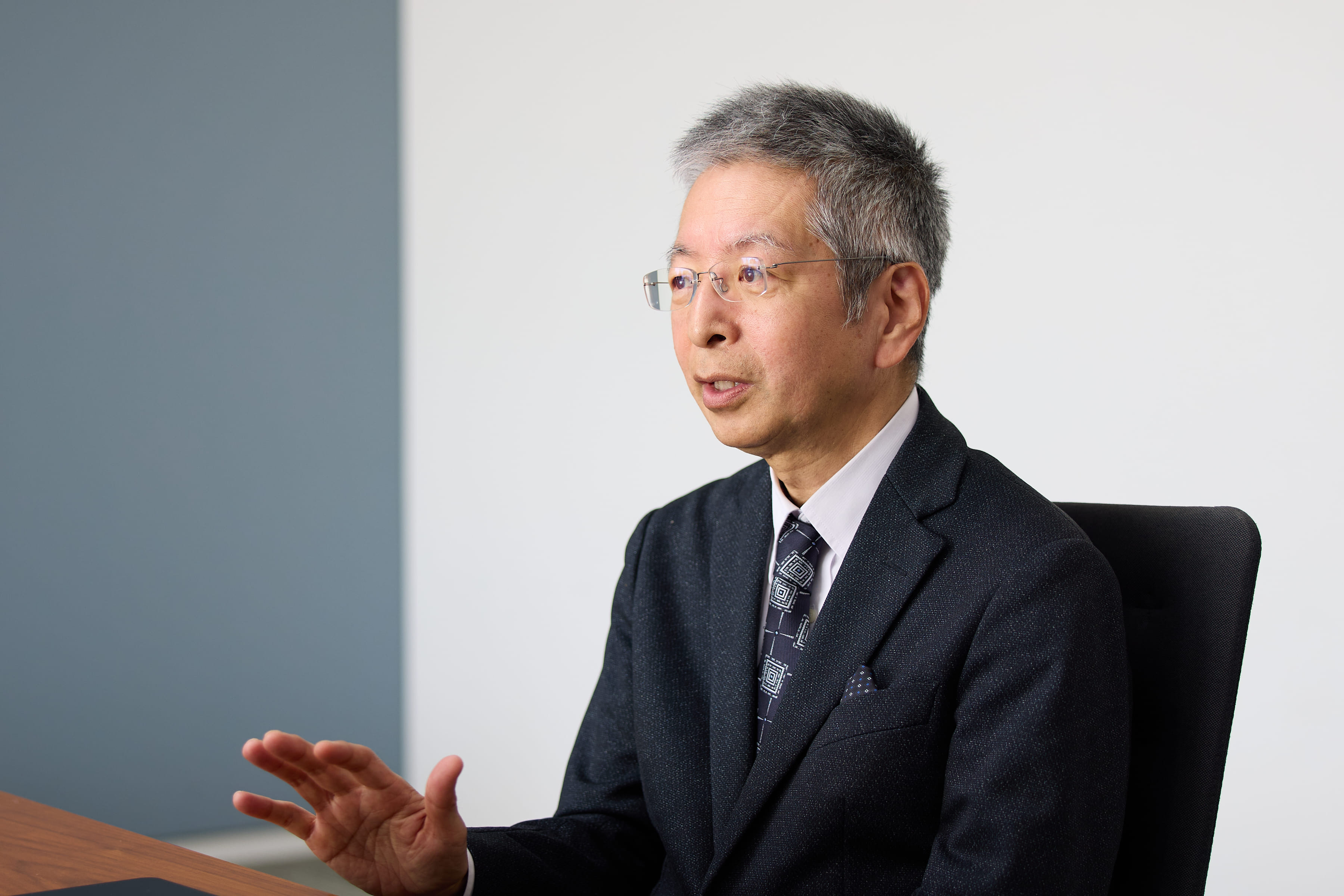
Ohtake: The answer naturally differs from person to person. For me, however, it means having enough time to calmly organize and develop my thoughts. The reason is simple: much of my daily life is the opposite of that. I often find myself rushing to meet deadlines, supporting students, and handling various responsibilities. When life is constantly hectic, I certainly would not describe myself as mentally fulfilled. Although I teach at a university and serve on government committees, my primary identity is that of a researcher. Education and public service are important aspects of my work, but research remains my highest priority. Therefore, when I have uninterrupted time to immerse myself in my own ideas and pursue them deeply, that is when I genuinely feel a sense of mental richness and fulfillment.
— In addition to your academic research, you supervise students and serve on various government-related committees. It sounds like your schedule is extremely demanding.
Ohtake: In 2023, I also co-founded a consulting startup called CoBe-Tech with Professor Kei Hirai. The company applies insights from behavioral economics and cognitive behavioral science to consulting projects. The feeling that I never have enough time actually began many years ago. Around the time my children were born and parenting became a major commitment, I also took on administrative responsibilities at the university. Faced with increasingly limited time, I began thinking seriously about how I should allocate it—or, put differently, what I truly wanted to prioritize. One of the first rules I established for myself was that I would stop drinking alcohol.
— Were you a particularly heavy drinker?
Ohtake: Not at all. I enjoyed drinking about as much as the average person. But time is limited. Drinking consumes time directly, and even after drinking, reduced productivity can linger. If you drink too much, the effects of a hangover can impact the following day as well. Moreover, deciding each time whether to drink or not requires mental effort. Even setting limits—such as deciding how many drinks are acceptable on a particular occasion—is surprisingly difficult. You may begin with the intention of having only one drink, but once you start, it becomes tempting to have just one more. Behavioral economics describes this tendency as present bias. Before drinking, you're capable of making a rational decision to stop after one glass. But once you're drinking, the immediate pleasure becomes more salient, and you postpone the decision to stop. For that reason, I found it easier simply to decide in advance that I wouldn't drink at all. One practical commitment device is deliberately driving or cycling to an event so that drinking is no longer an option. To be clear, drinking was enjoyable. But it also came with costs. I asked myself which was ultimately more valuable: the temporary pleasure of drinking, or maintaining a state in which I could immediately immerse myself in meaningful work? Behavioral economics encourages us to make such decisions in advance, while we're calm and thinking clearly. By carefully considering the trade-offs and deciding beforehand, we avoid being swayed in the moment. After I stopped drinking, I gained more time and energy to devote to the research that matters most to me.
⚫︎Cognitive Resources Are Limited for Everyone
— It's interesting that even an everyday decision such as whether to drink alcohol can be understood through behavioral economics.
Ohtake: Absolutely. Before I began studying behavioral economics, I largely accepted the assumptions of traditional economics. The conventional view is that having as many options as possible is desirable and that people should choose the optimal option depending on the circumstances. Behavioral economics takes a different perspective. It recognizes that our cognitive resources are limited. If we spend too much time and energy deliberating over trivial matters, we quickly become mentally exhausted. Furthermore, even when we attempt to choose the best option, we are influenced by various biases that often lead us away from genuinely optimal decisions. That is why behavioral economics recommends making important decisions when we have sufficient time and mental capacity to think carefully, then turning those decisions into rules. Of course, circumstances change, and rules can sometimes be restrictive. Yet aiming for perfection in every situation often fails. Achieving a good-enough outcome consistently may be preferable to pursuing the perfect outcome and ending up with the worst one. For me, this approach preserves the time and mental energy needed for deep thinking, which ultimately contributes to a richer inner life.
— Bias is often described as a preconceived notion or distortion in thinking. Is that an accurate understanding?
Ohtake: In behavioral economics, a bias refers to a systematic tendency for our judgment or decision-making to deviate from what we might consider fully rational. Biases are not rare phenomena; they appear constantly in everyday life. One particularly important example is present bias, which causes people to procrastinate. We can create disciplined plans for the future, but when the moment arrives to act, we often prioritize immediate gratification over future benefits. A student may decide to study extensively, for example, but then continually postpone difficult subjects while focusing only on the topics they enjoy. Behavioral economics identifies many biases of this kind. Yet once we understand them, we can also learn to use that knowledge to improve our own behavior. At the same time, many advertisements intentionally exploit these biases. As a result, people often find themselves purchasing products they never intended to buy. Understanding behavioral economics can help individuals become more resistant to such influences.
⚫︎Using Nudges on Ourselves
— The term “nudge” is also closely associated with behavioral economics, isn't it?
Ohtake: That's right. The term comes from the English word nudge, meaning a gentle push with the elbow to attract someone's attention. In behavioral economics, it refers to designing environments or systems that subtly encourage desirable behavior. Richard Thaler received the Nobel Prize in Economic Sciences in 2017 not only for his foundational contributions to behavioral economics but also for demonstrating how nudges can improve society. A true nudge is intended to help people live better lives. If a technique manipulates people into actions they later regret—such as certain forms of advertising—it is no longer a nudge in the proper sense. Likewise, designs that make beneficial actions unnecessarily difficult are sometimes called sludge. The spirit of nudging is to help people move closer to the choices they themselves would make under conditions of careful reflection. In that sense, nudges are ultimately about supporting human flourishing and mental well-being.
— From a behavioral economics perspective, then, how would you define mental fulfillment?
Ohtake: Most people probably think of it simply as feeling good. From my perspective, mental fulfillment means not wasting cognitive resources worrying about trivial matters or unnecessary anxieties, and instead being able to focus on decisions and actions that genuinely matter. In other words, it is a state in which we can devote our limited attention and energy to meaningful goals rather than squandering them on countless minor choices.
— If we look at people who seem mentally fulfilled, are there particular behavioral patterns that stand out?
Ohtake: I think the key is that they deliberately allocate their time so they can focus on what matters most. You could even say that they strategically apply nudges to themselves. One effective method is commitment. By making decisions and commitments in advance, people reduce the likelihood of procrastination. Many people dislike commitments because they feel restrictive. Yet without them, we often delay important actions indefinitely. In that sense, committing early can be a highly effective strategy.
— In that sense, would you say that Mental Battery and Mentoring 2 could also serve as effective nudges?
Ohtake: I believe they have that potential. People often make plans, but when the outcome of their efforts is uncertain, they tend to lose motivation. In that regard, making the results of one's efforts visible can be extremely valuable. Moreover, overcoming procrastination requires not only long-term goals but also clearly defined short-term goals. If people can set specific goals and monitor in real time whether they are achieving them, such a system can provide significant support in overcoming present bias and the tendency to procrastinate. From that perspective, Mental Battery and Mentoring 2 have the potential to be meaningful tools from a behavioral economics standpoint, particularly because they allow users to monitor their stress levels in real time.
⚫︎Real-Time Feedback as a Source of Motivation
— It certainly seems that receiving feedback in real time after making an effort would help sustain motivation.
Ohtake: A good example is the use of CO2 monitors during the COVID-19 pandemic. They were widely recommended in places where people gathered in order to encourage proper ventilation. Intuitively, it may be difficult to understand how simply installing a monitor could change people's behavior. However, after placing one in my own laboratory, I experienced its effect firsthand. When I was alone in the lab, the CO2 concentration typically stayed around 500 ppm. But as soon as several students came in and began discussing something together, the level would quickly rise above 1,000 ppm. Without a monitor, we would hardly notice such changes in air quality. Once I saw the numbers climbing, however, I immediately thought, "This isn't good." The monitor would often sound an alarm as well, prompting me to open the windows right away. Of course, opening the windows can be uncomfortable. In summer, hot air comes in; in winter, cold air enters the room. Yet what fascinated me was how quickly the CO2 concentration would fall back toward 500 ppm. Watching the numbers decline somehow felt rewarding. More rewarding, in fact, than the discomfort caused by the temperature change. Seeing the measurable results of my own action gave me a sense of satisfaction. That experience helped me appreciate the power of real-time feedback. When we make an effort and receive immediate confirmation that our action has produced a result, it simply makes us feel good.
— In that sense, would you say that Mental Battery and Mentoring 2 have a nudging effect through real-time feedback?
Ohtake: If they make a person's condition visible in real time, then I believe they can function as a nudge. When someone takes action to reduce stress and can immediately see the results, it increases motivation. For example, I commute by bicycle for health reasons. While riding, I monitor my heart rate in real time and display it on a smartphone attached to the handlebars. When I pedal hard up a hill, my heart rate rises and the exercise becomes physically demanding. Under normal circumstances, that discomfort might make me want to stop. However, when I can actually see my heart rate increasing, the results of my effort become visible. That visibility itself becomes motivating. In other words, the increase in heart rate serves as an immediate reward for my effort. Seeing that reward makes me feel satisfied and encourages me to continue. The principle is exactly the same.
— It sounds as though nudges can also help people overcome various biases.
Ohtake: Exactly. They can support people in overcoming present bias and the tendency to procrastinate. From an organizational perspective, additional incentives can make such interventions even more effective. Direct financial rewards may be too explicit in some cases, but recognition or awards can also work. If used effectively, these mechanisms can increase employees' motivation. That benefits not only the individual but also the organization as a whole, potentially leading to stronger performance and better outcomes.
⚫︎Protecting Cognitive Resources and Living More Fully
Human cognitive resources are limited. For that reason, behavioral economics suggests that true mental fulfillment comes from avoiding the unnecessary expenditure of energy on trivial decisions and preserving our attention for what truly matters. According to Professor Ohtake, tools such as nudges, commitment devices, and real-time feedback are practical forms of wisdom that gently support us in making better choices and sustaining desirable behaviors. In the next installment, we will explore the nature of the various biases that influence our decisions and discuss how understanding—and even leveraging—them can help create greater mental space and peace of mind.
Profile
Fumio Ohtake(Specially Appointed Professor, Center for Infectious Disease Education and Research, Osaka University)
After graduating from the Faculty of Economics at Kyoto University, he proceeded to the Graduate School of Economics at Osaka University and earned his Ph.D. in Economics. He served as a Research Associate in the Faculty of Economics at Osaka University, Professor at the Institute of Social and Economic Research at the same university, and Professor in the Graduate School of Economics, before assuming his current position in 2021. His awards include the Japan Academy Prize, the Suntory Prize for Social Sciences and Humanities, and the Nikkei Prize for Excellent Books in Economic Science.
His fields of specialization are behavioral economics and labor economics. He is engaged in marketing research and the creation of nudge-based messaging for government and corporations, as well as consulting and advisory work that applies behavioral economics.