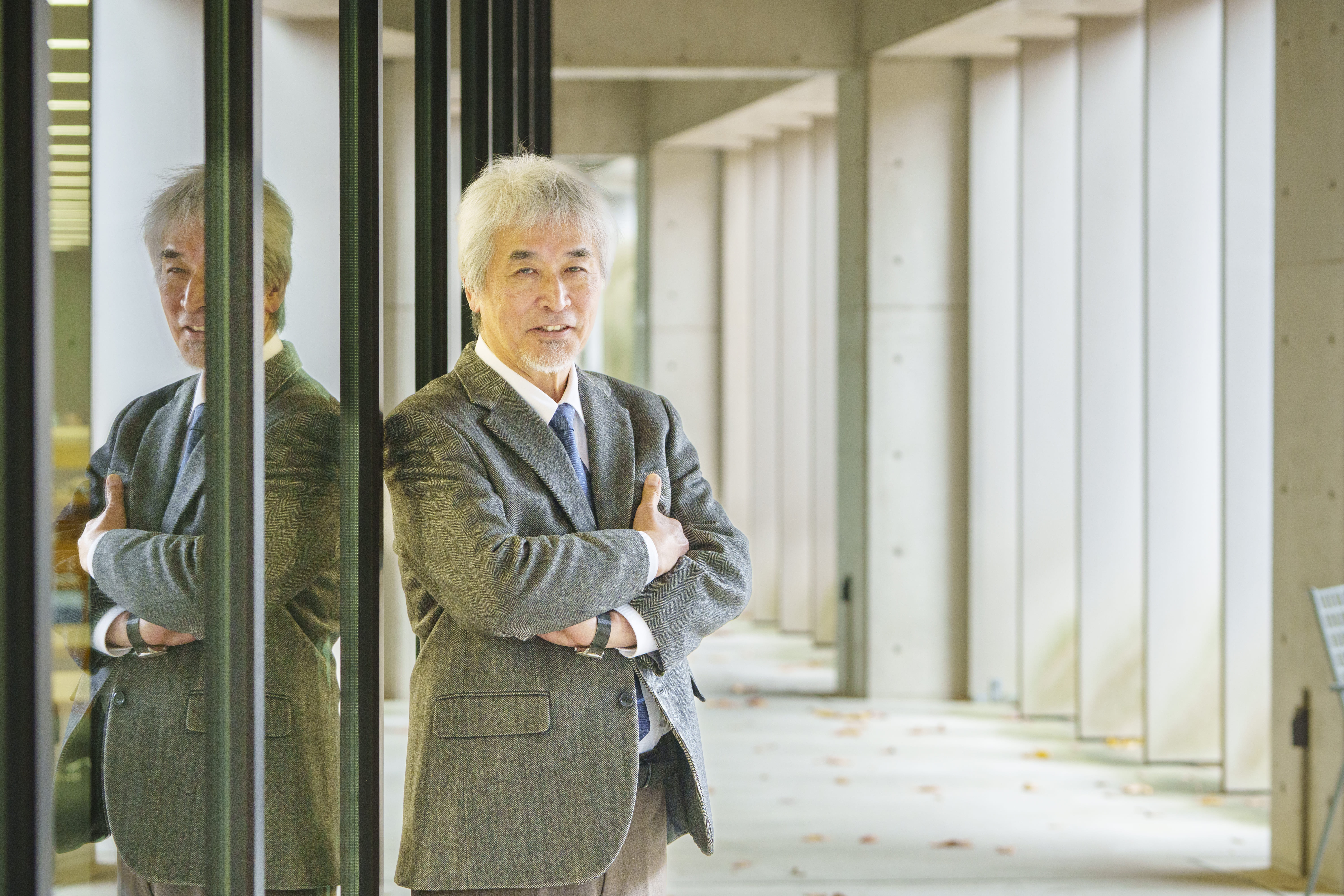
⚫︎The Flow of Time and Human Perception
Adachi: In our last conversation, you spoke about the difference between correlation and causation. One statement in particular stayed with me: human beings are the only creatures that think in terms of cause and effect.
Yamagiwa: To revisit that point, causation involves tracing events backward in search of their causes. As soon as you do that, the concept of time enters the picture. Correlation, by contrast, is a matter of probability. When one event occurs, another event becomes more likely to occur. This understanding is based on experience and can be learned.
Adachi: So causation is inseparable from our perception of time.
Yamagiwa: Exactly. When we think in terms of causation, we see past events arranged in chronological order. There is a flow from the past into the present. Because we can refer to the past, we can also attempt to foresee the future. That is the strength of causal thinking. However, this does not mean that causation is inherently superior to correlation.
Adachi: Certainly. If we understand correlations, we can react instantly when something happens. Constantly stopping to analyze causes could sometimes slow us down.
Yamagiwa: Take an earthquake, for example. You must respond immediately. If you stop to wonder what caused it, you may fail to escape in time. There is another aspect as well. Thinking about causes often leads to reflection and regret. When people start asking why something happened, they often end up thinking, "I should have done things differently."
Adachi: Unlike humans, animals probably do not engage in that kind of reflection. They simply live in the present. Perhaps that is why they seem content.
Yamagiwa: The philosopher Kitaro Nishida once wrote that time does not flow from the past into the present but from the present into the present. My own interpretation is that time may also flow from the future toward the present.
Adachi: Listening to you, I am reminded of the Japanese word saki. It refers to the future, but it can also refer to the past, as in sakihodo (“a little while ago”). Perhaps that reflects a human intuition that time can feel as though it flows from the future into the present as well.
Yamagiwa: Interestingly, animals think about the future too, although on a much shorter timescale. When bamboo shoot season approaches, gorillas begin moving into bamboo forests. The shoots are not yet visible, but they anticipate them through changes in climate and subtle shifts in the environment. This is a form of near-future prediction based on correlation. Gorillas possess an understanding of space and a mental map of how that space changes over time.
Adachi: Almost like a space-time map. That is an impressive ability.
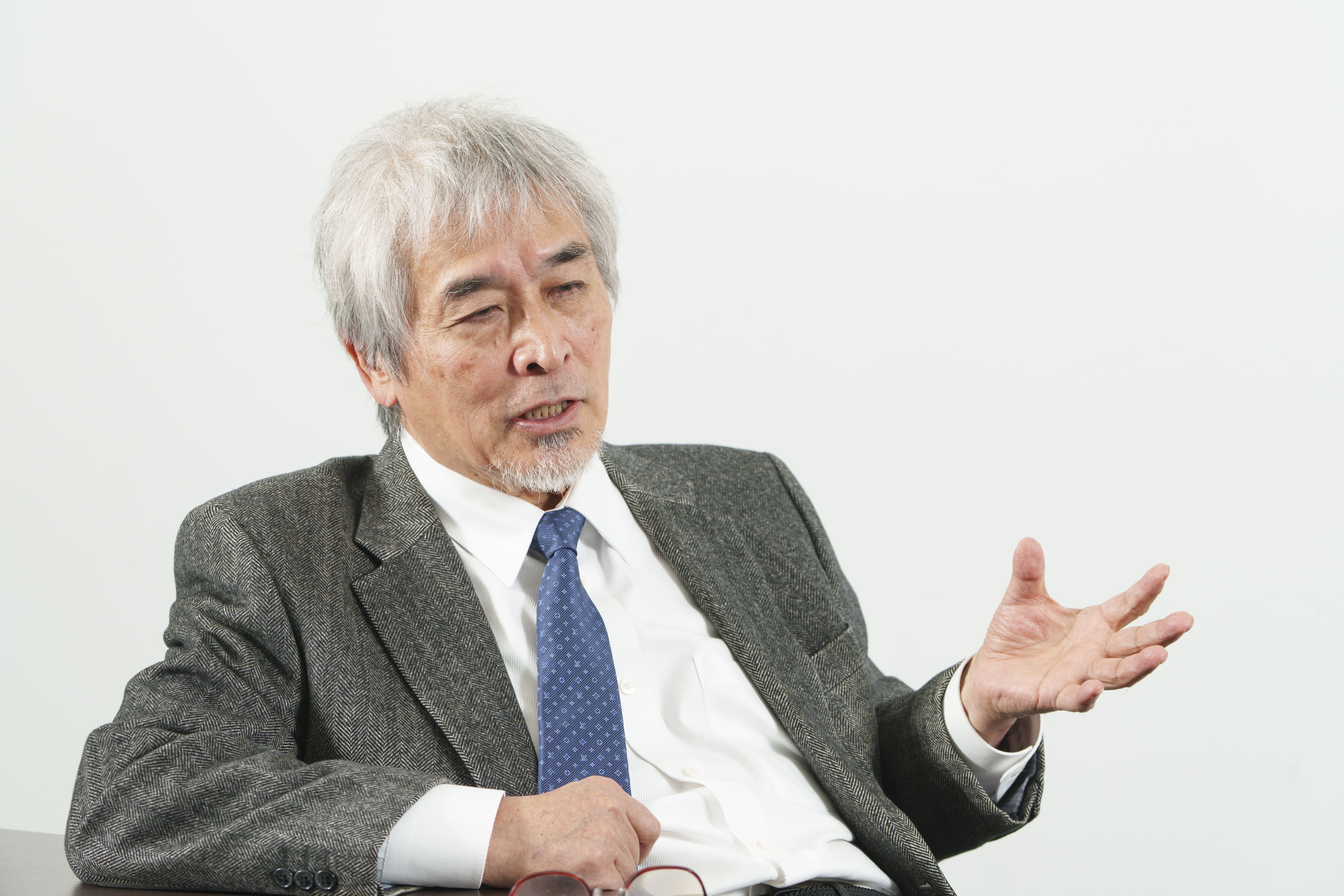
⚫︎The Power of Language
Yamagiwa: What animals cannot do is predict events far into the future. Humans can, and the reason is language. Language is a tool for communicating things that cannot be seen. Something that exists far away is invisible. Likewise, an event that has not yet happened is also invisible. Language makes both of these things visible. That said, I believe humans possessed stories even before they possessed language.
Adachi: Stories without language? How would that be possible?
Yamagiwa: Through tools. Even a simple stick becomes something more when it is used as a tool. Suppose it is used to fish termites from a mound. The stick acquires a function. Once you obtain the stick, you can already envision the future act of gathering termites. In that sense, humans are not unique. Monkeys also use tools. If a tool allows prediction, then language is not yet necessary.
Adachi: So tools can serve as a kind of substitute for language.
Yamagiwa: Monkeys also possess social cognition. They compare themselves with others and adjust their behavior accordingly. A weaker monkey instantly understands that a stronger one may steal its food. As social cognition becomes more advanced, animals can even infer the emotional states of others and alter their behavior based on past experiences. This is what is known as the theory of mind.
Adachi: I had no idea non-human animals could possess something like a theory of mind. That is remarkable.
Yamagiwa: The theory of mind applies most clearly to great apes. Humans, however, possess an even higher level of cognition. Great apes cannot infer the thoughts of others when they themselves are not involved in a situation. Humans can. We can observe interactions between other people and understand what they are thinking and trying to accomplish. We can then decide whether to participate and imagine what might happen if we do. We can even anticipate the eventual outcome.
Adachi: So these abilities developed before language. Humans were already using tools, interacting socially, and expanding their social cognition before language emerged.
Yamagiwa: Language dramatically amplified those abilities. Before language, humans had already begun using fire around 800,000 years ago. Before that, nights were completely dark. Once fire appeared, people may have begun sharing collective visions and imaginations. Religious rituals likely emerged during that period, long before agriculture and pastoralism. Consider Göbekli Tepe in present-day Turkey. Archaeologists have uncovered many abstract structures there. Such creations would have been impossible without the ability to imagine things that did not yet exist.
Adachi: So humans developed imagination, and then language expanded their world even further.
Yamagiwa: Exactly. Language allows ideas to be shared. Because words are abstract symbols without physical weight, they can be carried anywhere. More importantly, language allows us to communicate things that cannot be seen.
⚫︎How Language Made Humans Stronger
Adachi: In our previous conversation, you explained that humans repeatedly transformed weaknesses into strengths. We lack fangs, claws, and durable skin. Yet somehow we survived. Are you saying that our ability to perceive the invisible and understand causality became part of that evolutionary advantage?
Yamagiwa: Precisely. One of the key differences between Homo sapiens and Neanderthals was planning ability. Homo sapiens could share plans collectively. That allowed them to coordinate large groups and drive massive animals toward cliffs during hunts. Neanderthals were unable to organize themselves on that scale. The difference lay in language.
Adachi: Listening to you makes me think about both the benefits and the dangers of language. Today it often feels as though we have lost control of language, or perhaps language is controlling us.
Yamagiwa: I think that is true. When language first emerged, human groups were still small. People used language to cooperate because they faced constant threats from nature. The greatest danger came from predators. Weak humans needed to work together to survive. Natural disasters posed another threat. People observed warning signs, shared information, and protected one another. That was the original function of language.
Adachi: Those are certainly positive aspects of language.
Yamagiwa: But language also created analogy. Later, as food production became possible, humans settled permanently in one place. At that point language gradually shifted from protecting people against nature to being directed against other humans. People began comparing one another to animals, saying things like, "He is as cunning as a wolf."
Adachi: So the ability to store food and settle down may not have been entirely beneficial.
Yamagiwa: As the Mesopotamian archaeologist James Scott argues in Against the Grain, agricultural societies were not necessarily prosperous societies. Agriculture depended heavily on climate conditions, making harvest failures inevitable. Famines killed large numbers of people, and concentrated populations facilitated the spread of disease. Even after agriculture emerged, many communities alternated between farming and hunting-gathering lifestyles. It took roughly four thousand years before agriculture became firmly established. Small hunter-gatherer groups simply relied on nature's resources and moved elsewhere when resources became scarce. That approach was often safer. But once people began cultivating grain and could expect relatively stable harvests, they settled permanently.
Adachi: That transition to settlement seems like the beginning of the society we live in today. It feels like progress.
Yamagiwa: Not necessarily. Settlement also means losing the ability to leave. In earlier times, when conflicts arose, groups could simply separate. Once people became tied to a particular place, that option disappeared. Societies emerged that accepted inequality and concentrated power in the hands of a few. The ability to store food created divisions between those who accumulated wealth and those who were exploited. Eventually populations grew and city-states emerged. Yet according to James Scott, the earliest city-states were essentially slave states. The first wars were not fought to expand territory but to capture people and force them into labor producing grain.
Adachi: And that grain became the basis of taxation. Society became even more rigid and inescapable.
Yamagiwa: Exactly. Once social classes become established, those at the bottom rarely challenge those above them. That is why many European societies continue to tolerate inequality today.
Adachi: So although modern societies speak of freedom and equality, they are not necessarily built upon either. Property rights and unequal ownership remain foundational. There may be a deeper problem hidden there.
⚫︎Where the World Created by Language Is Headed
From tools to stories, and from stories to language, human beings acquired the ability to share things that could not be seen. That ability enabled larger communities, more sophisticated cooperation, and ultimately the rise of civilization.
Yet language also created new forms of comparison, hierarchy, and social control. It allowed humans to build societies that became increasingly difficult to escape.
In the final installment of this dialogue, the discussion turns to a new question: In a world shaped by such systems, how can human beings recover a sense of wildness and reconnect with what it means to be fully human?
Profile
Juichi Yamagiwa (Director-General, Research Institute for Humanity and Nature)
Born in Tokyo in 1952. Graduated from the Faculty of Science at Kyoto University and completed the coursework for a doctoral degree in the Graduate School of Science before withdrawing to pursue research. Holds a Doctor of Science degree. He has served as a visiting researcher at the Karisoke Research Center in Rwanda, a researcher at the Japan Monkey Centre, an assistant at Kyoto University's Primate Research Institute, and an associate professor, professor, and dean of the Graduate School of Science / Faculty of Science at Kyoto University, before serving as the 26th President of Kyoto University until 2020. A specialist in human evolutionary theory, he has conducted socioecological studies of wild Japanese macaques on Yakushima Island and of wild gorillas across Africa. He has also served as President of the Primate Society of Japan, President of the International Primatological Society, President of the Science Council of Japan, a member of the Council for Science, Technology and Innovation, and a Senior Advisor for Expo 2025 Osaka, Kansai, Japan.
He currently serves as Director-General of the Research Institute for Humanity and Nature. He is a recipient of the Minakata Kumagusu Prize and the Academia Prize. His many books include Everything Important in Life I Learned from Gorillas (Ie-no-Hikari Association, 2020), The Children Who Want to Throw Away Their Smartphones: Learning How to Live in an "Age of the Unknown" from the Wild (Poplar Shinsho, 2020), What a Gorilla Scholar Thought About in the Jungle of Kyoto University (Asahi Shinsho, 2021), Saruseijingo (Seidosha, 2022), The Empathy Revolution: The Evolution and Future of a Socializing Humankind (Kawade Shinsho, 2023), The Voice of the Forest, the Eyes of the Gorilla: Carrying the Essence of Humanity into the Future (Shogakukan Shinsho, 2024), To Humans Who Do Nothing but Quarrel: From the Land of Gorillas (Mainichi Shimbun Publishing, 2024), A Way of Thinking for Growing Old (Bungeishunju, 2025), and Thinking in the Forest of Gorillas (Mainichi Shimbun Publishing, 2025).
Jun Adachi (CEO of MENTAGRAPH Inc. / Director of D-LAB, Japan Tobacco Inc.)
At D-LAB, the corporate R&D organization of the JT Group, Adachi has led the planning and development of new businesses and founded MENTAGRAPH Inc. Previously, he worked at a UX consulting firm before joining Japan Tobacco Inc. in 2018.