⚫︎Where Does the Mind Exist?
Adachi: For many years, I have been thinking about how people can better understand their own minds. One outcome of that work has been the development of the Mental Battery service and the smart ring Mentoring 2, technologies designed to visualize otherwise invisible mental states and support self-awareness. Even so, there is still so much we do not understand about the mind. To deepen our understanding, I would like to begin with a fundamental question: Where does the mind exist?
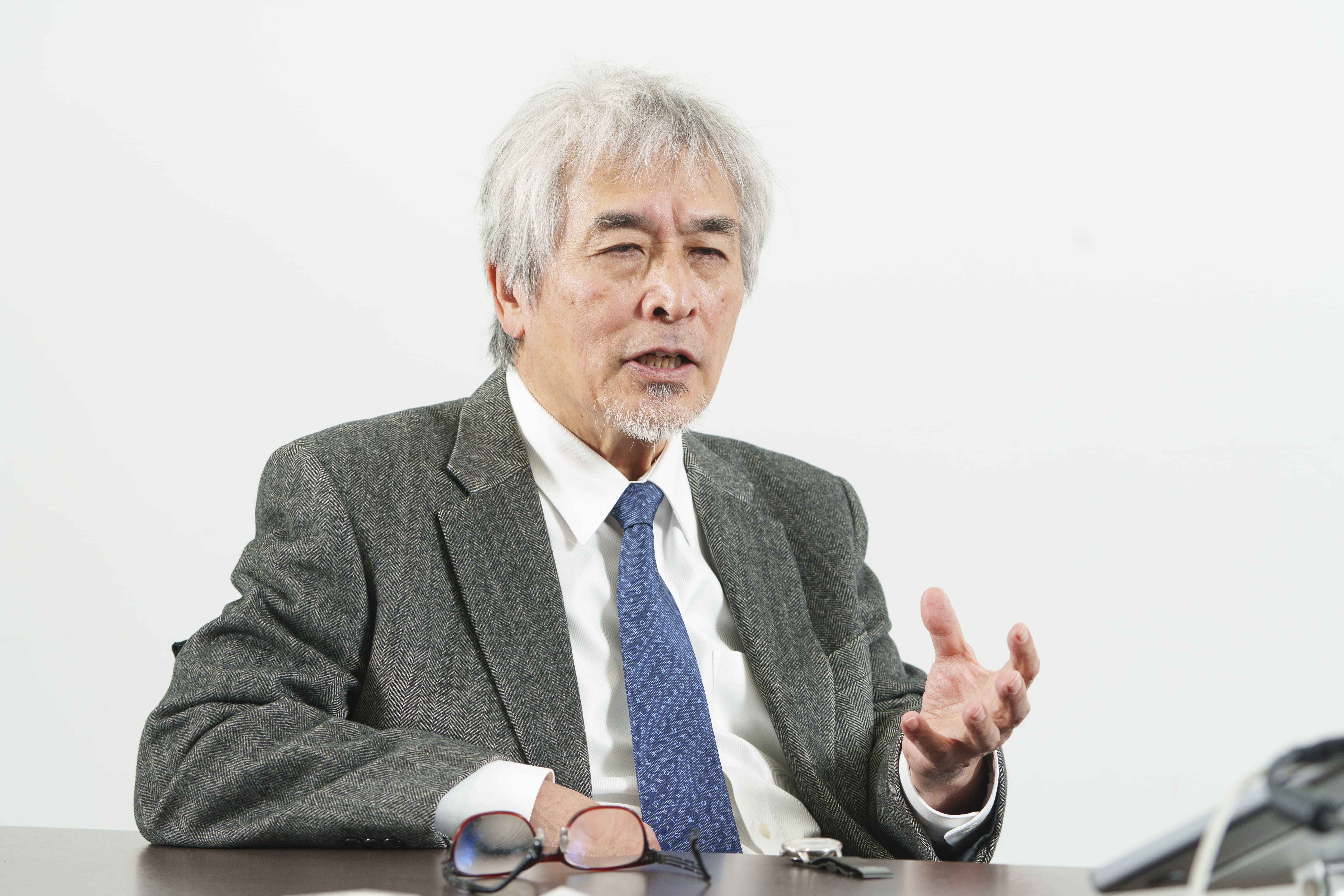
Yamagiwa: My answer may sound extreme, but I do not think the mind exists within an individual at all. Rather, I believe the mind emerges within relationships between people. The mind comes into being when one person encounters another. It is not something that belongs solely to an individual. Instead, it arises in the space between people.
Adachi: If the mind emerges through encounters, then do gorillas—animals you have studied for many years—also generate minds when they meet one another?
Yamagiwa: That is where humans differ from gorillas. Humans can step outside themselves and confront another person while simultaneously reflecting upon themselves. No other animal can do that. Humans are capable of observing themselves from an external perspective and engaging with themselves. From that process emerges a uniquely human kind of mind. That is why I believe only humans possess what might be called a "mind that exists between people." René Descartes famously defined human beings with the phrase, "I think, therefore I am." I believe he was mistaken. Philosophers such as Kitaro Nishida, Tetsuro Watsuji, and Kinji Imanishi were closer to the truth when they suggested something more like, "I feel, therefore I am."
Adachi: Yet humans are driven not only by sensations and desires, but also by beliefs.
Yamagiwa: Exactly. And that is why so many people today are influenced by social media. Without any real evidence, people encounter information online that aligns with their preferences or desires and absorb it as if it were part of their own belief system. This is one of humanity's weaknesses. As a result, science itself is becoming less persuasive. Science deals with facts, but it cannot provide belief. What many people seek online is not truth but beliefs that conveniently support what they already want to think. That is how we have arrived at our current situation.
Adachi: Human desires are shaped by beliefs, but surely desire itself begins with some kind of stimulus?
Yamagiwa: Certainly. Humans possess five senses through which we receive stimuli. Looking at a stone evokes a different response than looking at a mouse. Our reactions depend not only on the object itself but also on which sense is involved. However, human perception is not universal. Honeybees can see ultraviolet light that humans cannot see. Elephants can perceive low-frequency sounds beyond our hearing range. Every species inhabits its own unique perceptual world, yet somehow all of us share the same broader world.
Adachi: That sounds similar to Jakob von Uexküll’s concept of the Umwelt—the idea that every organism inhabits its own subjective world. I have also heard that recent discoveries are changing how we understand relationships between plants and animals.
Yamagiwa: Indeed. For a long time, conventional wisdom held that plants were passive organisms merely exploited by animals because they cannot move. Now, however, evidence is emerging that plants may actively influence and even control animal behavior. Likewise, humans have long assumed that because we possess large brains, we sit at the pinnacle of the animal kingdom. Yet elephants and whales have larger brains than we do. And relative to body size, octopuses possess remarkably large nervous systems. An octopus can even control each of its eight arms semi-independently, performing multiple tasks simultaneously without relying entirely on a centralized brain. In an age flooded with information, it may ultimately be humans—who depend so heavily on centralized cognition—who become the more vulnerable species.
⚫︎Where Do Humans Stand?
Adachi: So humans may be inferior to octopuses in some respects, or even to plants?
Yamagiwa: If we frame everything in terms of winners and losers, we might conclude that humans are already losing to AI. But that does not mean humans are inferior. In fact, comparison with AI highlights what makes humans valuable. And what is that value? Our flaws. AI systems can connect seamlessly with one another. Human brains cannot. Precisely because we cannot directly connect our minds, we respect individuality, engage in dialogue, and form relationships. Human cognition is also limited. Yet because of those limitations, we can forget painful experiences and recover from them.
Adachi: So what we often regard as weaknesses may actually be strengths.
Yamagiwa: Exactly. Human beings have always transformed weakness into strength. More broadly, life itself has evolved through mutual dependence. Different species survive by compensating for one another’s weaknesses. Yet modern society increasingly seeks only to expand power and efficiency. I believe that is one of the greatest problems we face today.
Adachi: The idea that weakness encourages cooperation resonates deeply. Has this tendency always been part of human nature?
Yamagiwa: Roughly seven million years ago, humans diverged from the common ancestor we shared with chimpanzees and began following a distinct evolutionary path. One of the earliest uniquely human traits was bipedalism. Compared with four-legged locomotion, walking on two legs is slower and less agile. It is objectively a disadvantage. Yet bipedalism is energy-efficient over long distances and frees the hands to carry food. That allowed early humans to transport resources to safe locations and share them with others. In other words, a weakness became a strength. Because humans were physically weak, they learned to cooperate.
Adachi: So communal life has been central to humanity from the very beginning.
Yamagiwa: More than that. Compare humans with gorillas or chimpanzees, our closest relatives. Humans alone gather together to eat. Gorillas typically disperse when feeding. Humans come together. Sharing food became the foundation of peace within human societies. It signaled, "We will not fight over food." That shared understanding became a cornerstone of human social life.
Adachi: Food connects people, and once those connections form, deeper relationships emerge.
Yamagiwa: Exactly. From those relationships arose something uniquely human: the ability to desire things we cannot see. Imagine a group waiting for a member who has gone out to gather food. They hope that person will return with resources. That absent individual is invisible, yet people anticipate their return. Eventually the person comes back carrying food, and through that exchange, relationships are reinforced. Humans desire what is unseen. I believe this marks the beginning of uniquely human sociality.
Adachi: Humans were weak, so they shared food. Through that sharing, connections emerged. In that sense, weakness truly was transformed into strength.
Yamagiwa: There is another way in which humans differ from gorillas and chimpanzees: humans are highly reproductive. Humans can have children almost every year. Gorillas reproduce roughly once every four years, while orangutans may reproduce only once every nine years. Although declining birthrates are a modern concern, humans were fundamentally a highly reproductive species. Yet human children mature slowly. Raising many dependent children is clearly a disadvantage. No individual could raise so many children alone. As a result, human communities evolved systems in which many adults collectively participated in child-rearing. In other words, education emerged from the need to overcome this weakness.
Adachi: So even child-rearing reflects the transformation of weakness into strength. Human children also prioritize brain development over physical development. That must have contributed to our success as well.
Yamagiwa: Exactly. Because human childhood is so long, children have more time to learn. And they learn not only from their parents but from many other adults around them. That is how humans became capable of adapting to increasingly complex societies. This was the human way of life until roughly 12,000 years ago, before the rise of agriculture and pastoralism.
⚫︎When Humans Began Expanding Individual Capability
Adachi: Agriculture allowed people to secure food more reliably. Surely that major shift must also have transformed human relationships.
Yamagiwa: Absolutely. If I were to put it bluntly, agriculture introduced conflict. Humans began fighting one another. That may be the greatest change to occur since the rise of the earliest civilizations. Humanity shifted away from collective strength and toward expanding individual power. I believe this represented a mistake in human evolution. For most of our history, humans transformed weakness into strength through cooperation. Yet we eventually moved in the opposite direction, seeking to expand power itself. The result has been damage to both human society and the global environment. These are the two great crises we face today: the collapse of human society through conflict and the degradation of the Earth's environment. Both stem from humanity's unchecked expansion of individual desire.
Adachi: I find that argument very persuasive. Compared with other wild animals, humans really are inherently weak.
Yamagiwa: Consider our teeth. Most animals possess long canine teeth that function as powerful weapons. Others have sharp claws. Many can run faster than we can or climb more effectively. In nearly every respect, humans fall short.
Adachi: We are weak in so many ways. Yet through that weakness we created society and learned to cooperate.
Yamagiwa: Many contemporary hunter-gatherer societies still own very little as individuals. Resources are shared. Food gathered by one person is distributed among everyone. If someone falls ill, the entire community provides support. Even in Japan, up until the Edo period, people generally did not spend their lives worrying about the future. They trusted that others would help them if difficulties arose.
Adachi: Compared with today, that sounds almost like an ideal community.
Yamagiwa: Yet today people no longer trust one another. As a result, they increasingly depend on systems and institutions. They buy insurance. They monitor their savings. They entrust their security to formal structures. But is that really enough? Systems and institutions may be useful, but if they fail, who will help you? By contrast, when people are embedded in networks of trust, those networks continue to support them. One reason religion continues to function is precisely because it preserves such network effects.
⚫︎Humans Have Always Shared Their Weaknesses
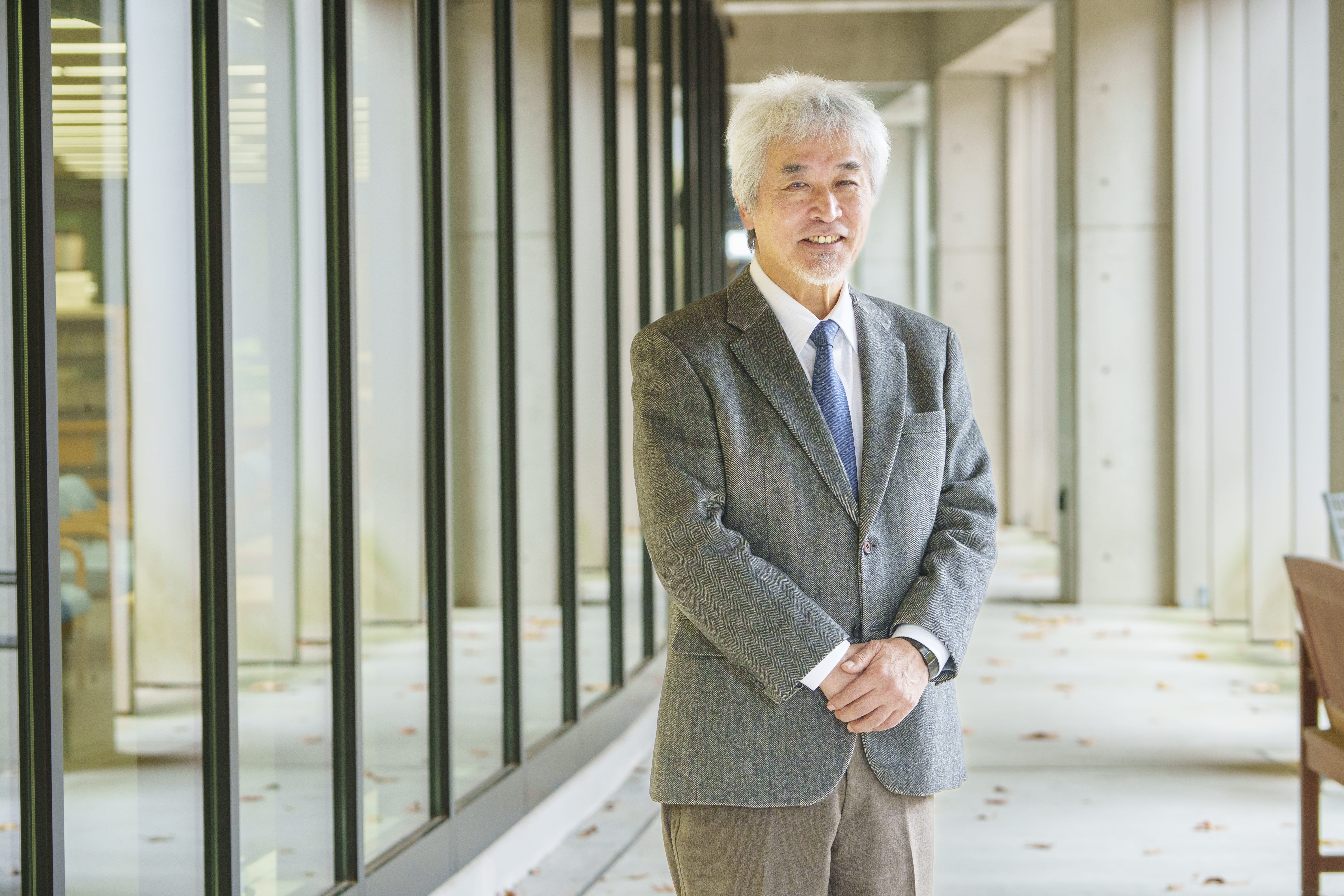
The mind does not exist solely within an individual; it emerges through relationships between people. That is Yamagiwa's perspective.
Over seven million years of evolution, humans built societies by acknowledging weakness, sharing food, and supporting one another. Yet with the rise of agriculture, humanity gradually shifted toward expanding individual power.
In the next installment, the conversation turns to the "mechanization" of humanity that accelerated after the Industrial Revolution and to the uniquely human strengths that still remain despite it.
Profile
Juichi Yamagiwa (Director-General, Research Institute for Humanity and Nature)
Born in Tokyo in 1952. Graduated from the Faculty of Science at Kyoto University and completed the coursework for a doctoral degree in the Graduate School of Science before withdrawing to pursue research. Holds a Doctor of Science degree. He has served as a visiting researcher at the Karisoke Research Center in Rwanda, a researcher at the Japan Monkey Centre, an assistant at Kyoto University's Primate Research Institute, and an associate professor, professor, and dean of the Graduate School of Science / Faculty of Science at Kyoto University, before serving as the 26th President of Kyoto University until 2020. A specialist in human evolutionary theory, he has conducted socioecological studies of wild Japanese macaques on Yakushima Island and of wild gorillas across Africa. He has also served as President of the Primate Society of Japan, President of the International Primatological Society, President of the Science Council of Japan, a member of the Council for Science, Technology and Innovation, and a Senior Advisor for Expo 2025 Osaka, Kansai, Japan.
He currently serves as Director-General of the Research Institute for Humanity and Nature. He is a recipient of the Minakata Kumagusu Prize and the Academia Prize. His many books include Everything Important in Life I Learned from Gorillas (Ie-no-Hikari Association, 2020), The Children Who Want to Throw Away Their Smartphones: Learning How to Live in an "Age of the Unknown" from the Wild (Poplar Shinsho, 2020), What a Gorilla Scholar Thought About in the Jungle of Kyoto University (Asahi Shinsho, 2021), Saruseijingo (Seidosha, 2022), The Empathy Revolution: The Evolution and Future of a Socializing Humankind (Kawade Shinsho, 2023), The Voice of the Forest, the Eyes of the Gorilla: Carrying the Essence of Humanity into the Future (Shogakukan Shinsho, 2024), To Humans Who Do Nothing but Quarrel: From the Land of Gorillas (Mainichi Shimbun Publishing, 2024), A Way of Thinking for Growing Old (Bungeishunju, 2025), and Thinking in the Forest of Gorillas (Mainichi Shimbun Publishing, 2025).
Jun Adachi (CEO of MENTAGRAPH Inc. / Director of D-LAB, Japan Tobacco Inc.)
At D-LAB, the corporate R&D organization of the JT Group, Adachi has led the planning and development of new businesses and founded MENTAGRAPH Inc. Previously, he worked at a UX consulting firm before joining Japan Tobacco Inc. in 2018.