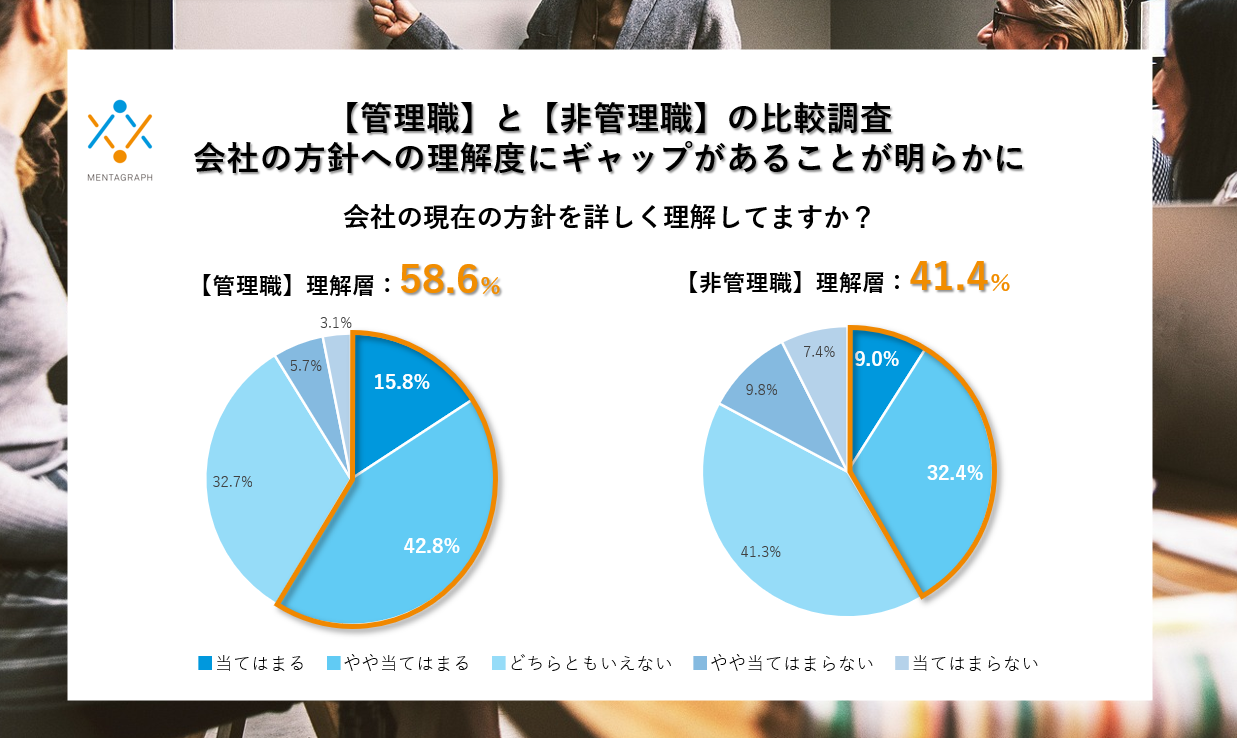
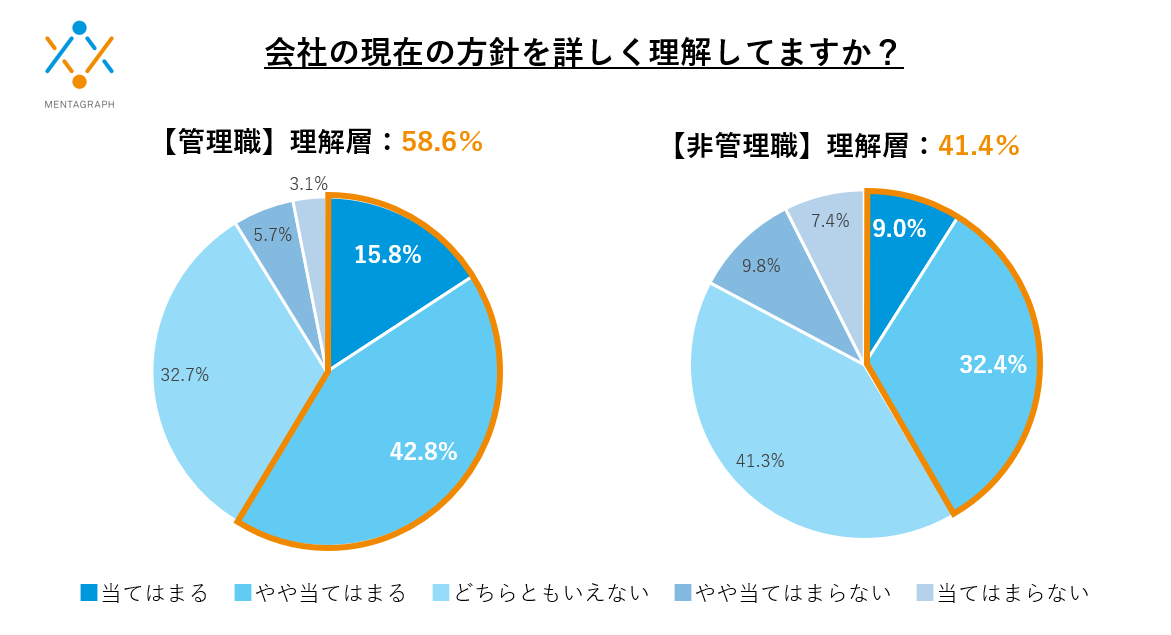
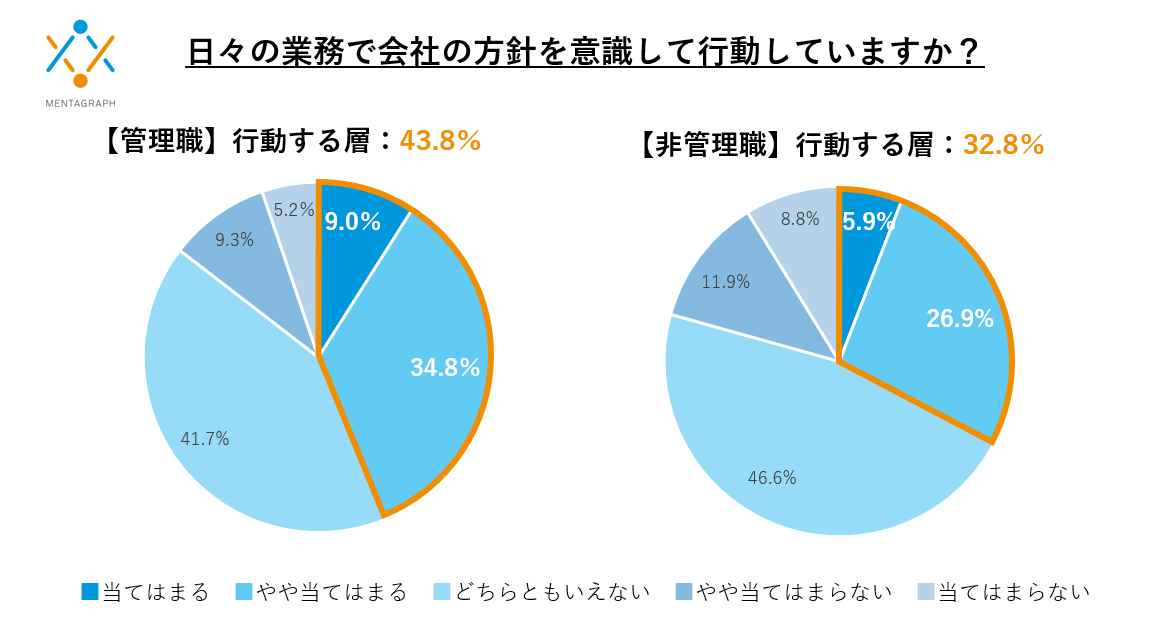
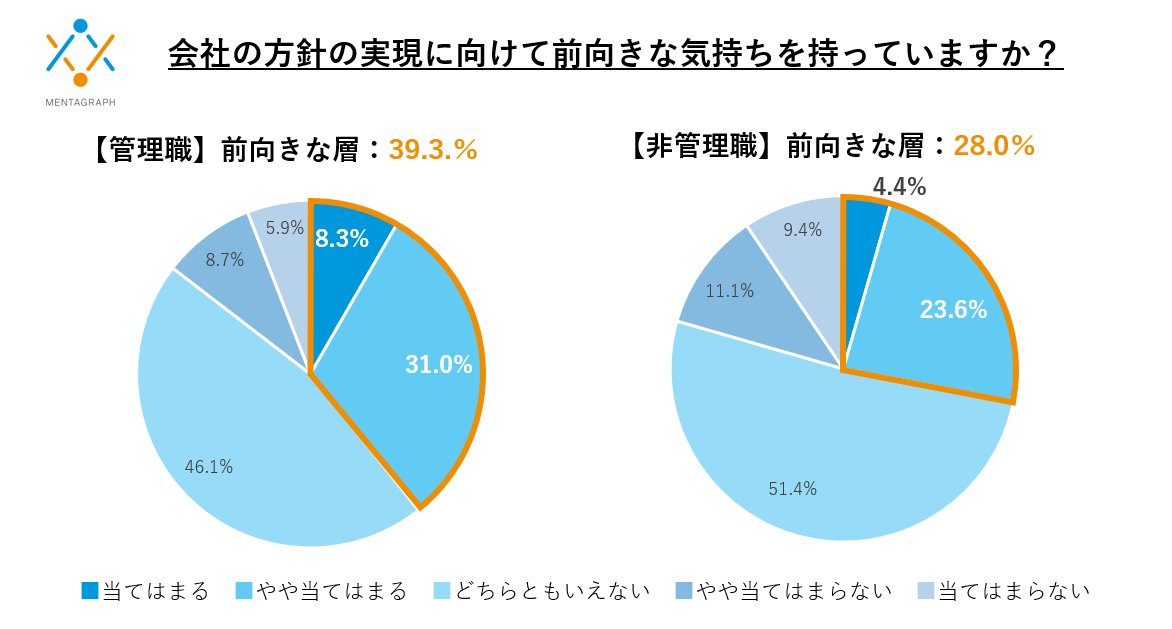
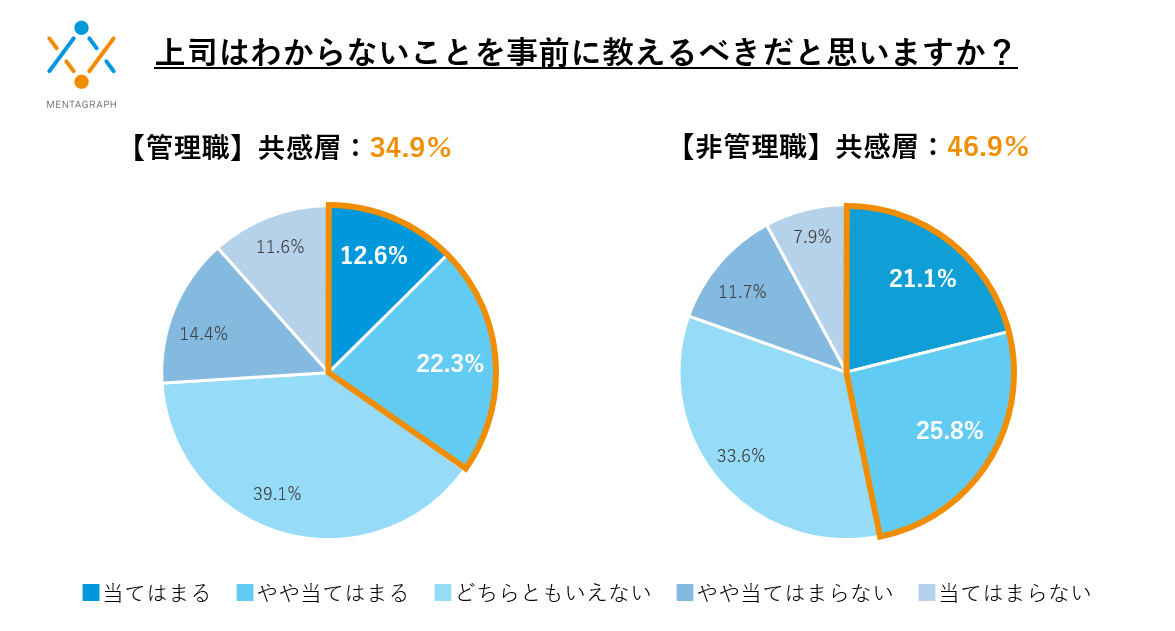
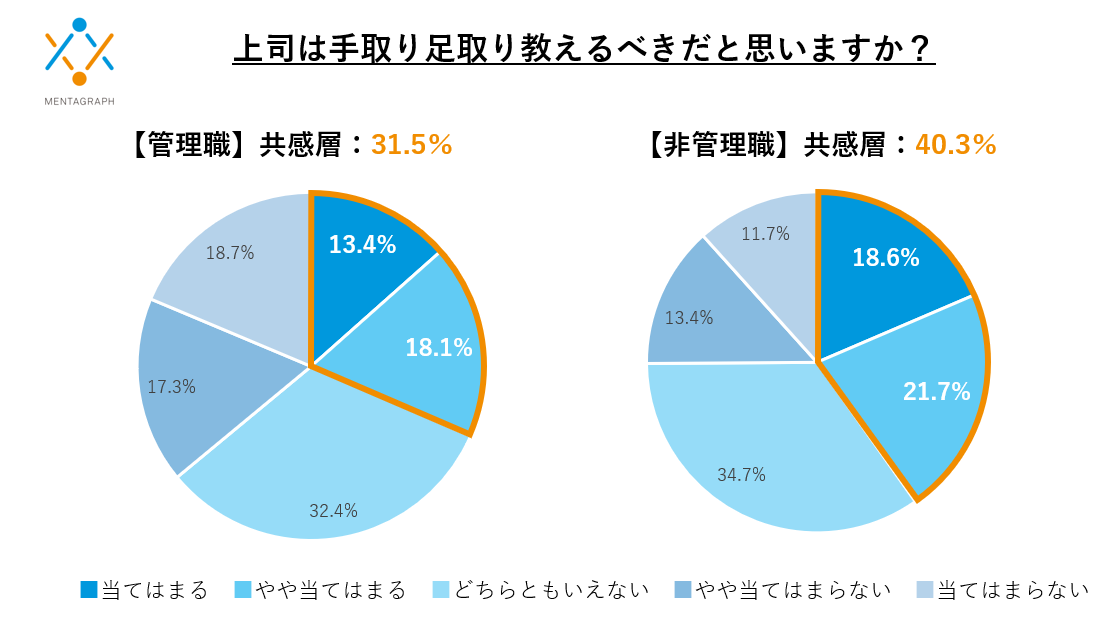
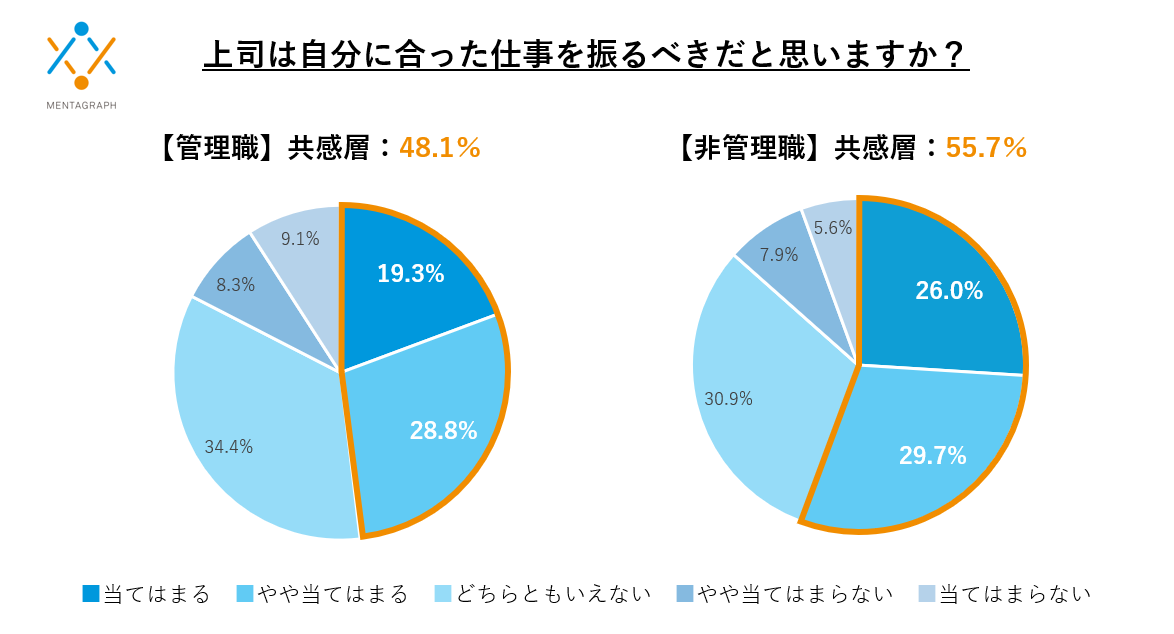
■Non-managerial employees clearly want more "direct support." There is also a 12-point difference in "expectations" from superiors.
The percentage of people who think that "supervisors should explain things they don't understand in advance" is 34.9% for managers and 46.9% for non-managerials, a difference of 12 points.
Additionally, when it comes to the item "supervisors should teach employees step by step," 31.5% of managers and 40.3% of non-managerials agreed, meaning that the number of non-managerials who agreed is 8.8 points higher than managers, indicating a tendency for non-managerials to desire more "direct support."
Furthermore, 48.1% of managers and 55.7% of non-managerial employees believe that their superiors should assign them work that suits them. This shows that nearly 60% of non-managerial employees expect "personalized consideration."
■ Does bosses' "support" not resonate with subordinates? Gaps in the level of emphasis on "goal setting" and "progress management" revealed
When it comes to managing their subordinates, managers place importance on "goal setting" (47.3%) and "progress management" (48.1%), while non-managerial employees only listed "goal setting" (31.7%) and "progress management" (33.3%) as areas they would like their superiors to emphasize. These results show that there is a large gap between the "supportive" management that managers place importance on, such as "goal setting" and "progress management," and the level of importance that non-managerial employees expect from their superiors.
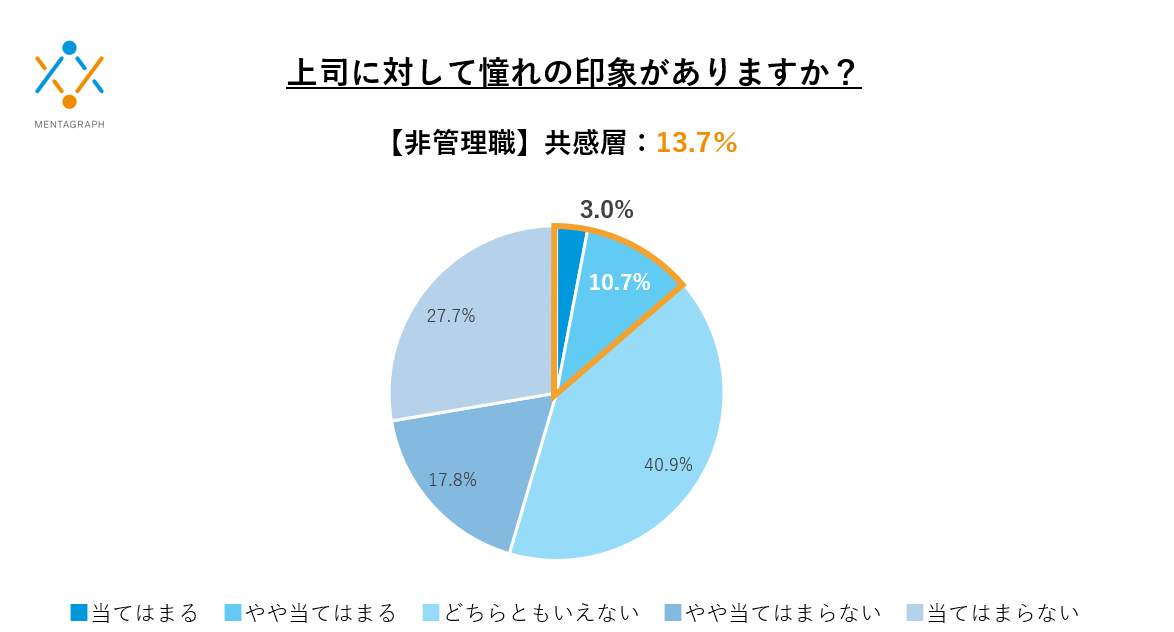
Furthermore, when non-managerial employees were asked whether they admire their superiors, only around 13% answered yes.
This survey revealed that there is a gap in awareness between managers and non-managerial employees in terms of "understanding and empathy for company policies" and "what is expected of management."
Even if both superiors and subordinates act with what they believe to be "good intentions," differences in fundamental values and expectations can lead to misunderstandings and stress in the workplace.
Companies can create a better management environment by making these awareness gaps visible and creating opportunities for superiors and subordinates to align their expectations.