MENTAGRAPH Inc. (Head office: Chuo-ku, Tokyo; a wholly owned consolidated subsidiary of JT) has compiled actual data on one-on-one meetings (1-on-1 MTGs) conducted among 724 business people nationwide aged 22 to 65 (300 managers and 424 non-managerial positions). The data revealed that while the system is becoming more widespread, it has become a mere formality and has become stale in the workplace.
This survey was conducted to gain a multifaceted understanding of the effectiveness and operational challenges of 1-on-1 MTGs, which are increasingly being introduced with the aim of supporting the growth of subordinates and resolving their anxieties and dissatisfaction. This time, we will clarify the gap in the perceptions and perceptions of superiors and subordinates from the perspective of "1-on-1 MTGs becoming a mere formality and becoming monotonous."
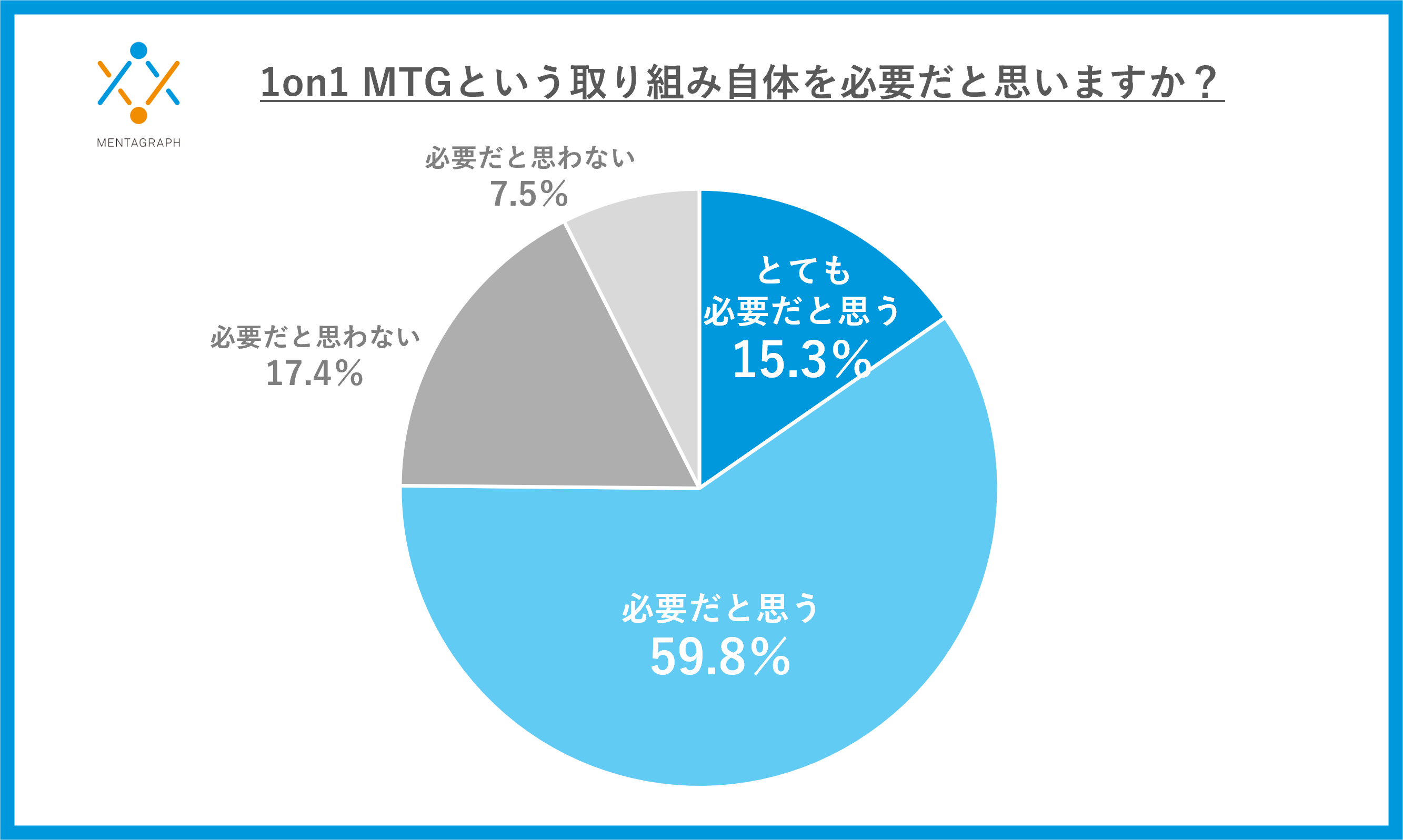
The survey results showed that 41.3% of companies hold one-on-one meetings between superiors and subordinates. When asked whether they think one-on-one meetings are necessary, 75.1% answered yes (very necessary: 15.3%, necessary: 59.8%), showing that both superiors and subordinates recognize their necessity.
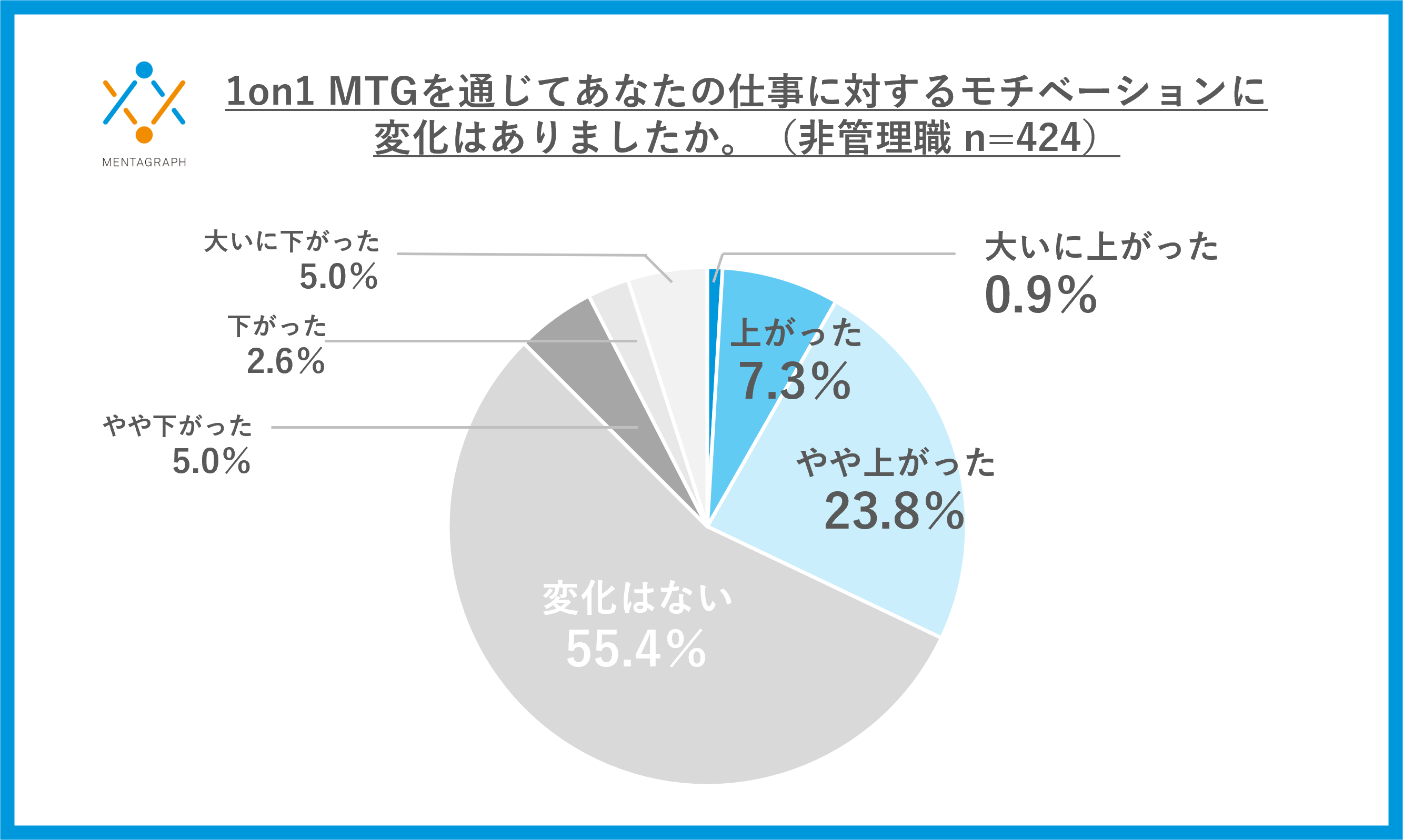
On the other hand, when non-managerial employees were asked whether their motivation had increased as a result of the 1-on-1 MTG, only 32.0% answered that it had increased (0.9% said it had increased a lot, 7.3% said it had increased, and 23.8% said it had increased somewhat), meaning that approximately 70% of non-managerial employees did not experience an increase in motivation.
Furthermore, when non-managerial employees were asked about their satisfaction with the one-on-one meetings they currently attend, only 36.5% were satisfied (satisfied: 4.7%, somewhat satisfied: 31.8%).
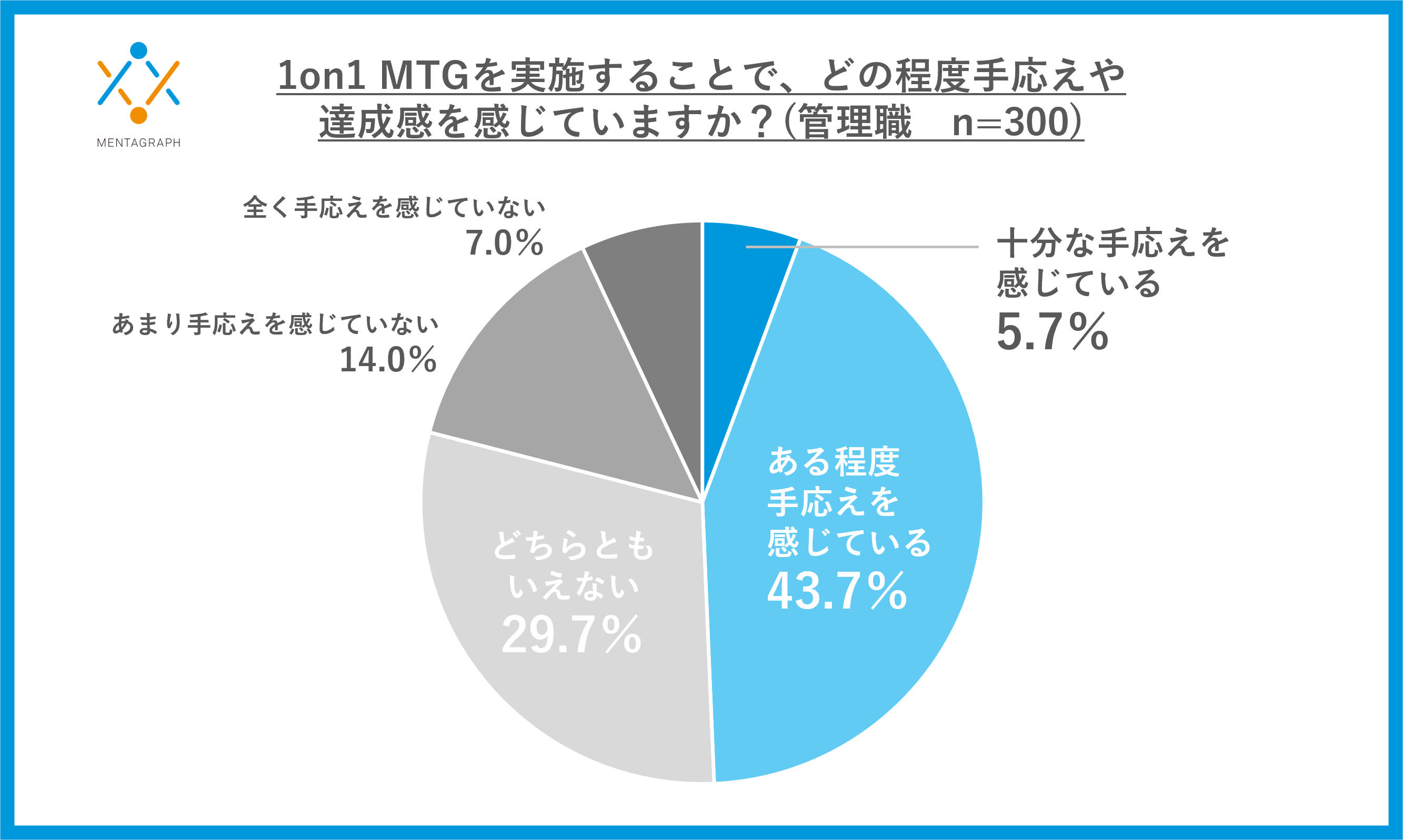
On the other hand, only about half of managers feel that 1-on-1s are effective (5.7% feel that they are sufficiently effective, 43.7% feel that they are somewhat effective), revealing a gap between the response of superiors and the satisfaction of their subordinates. These results suggest that, due to social expectations and pretense, superiors tend to be satisfied with the mere act of "conducting 1-on-1s," and that this may not lead to the intrinsic satisfaction of their subordinates.
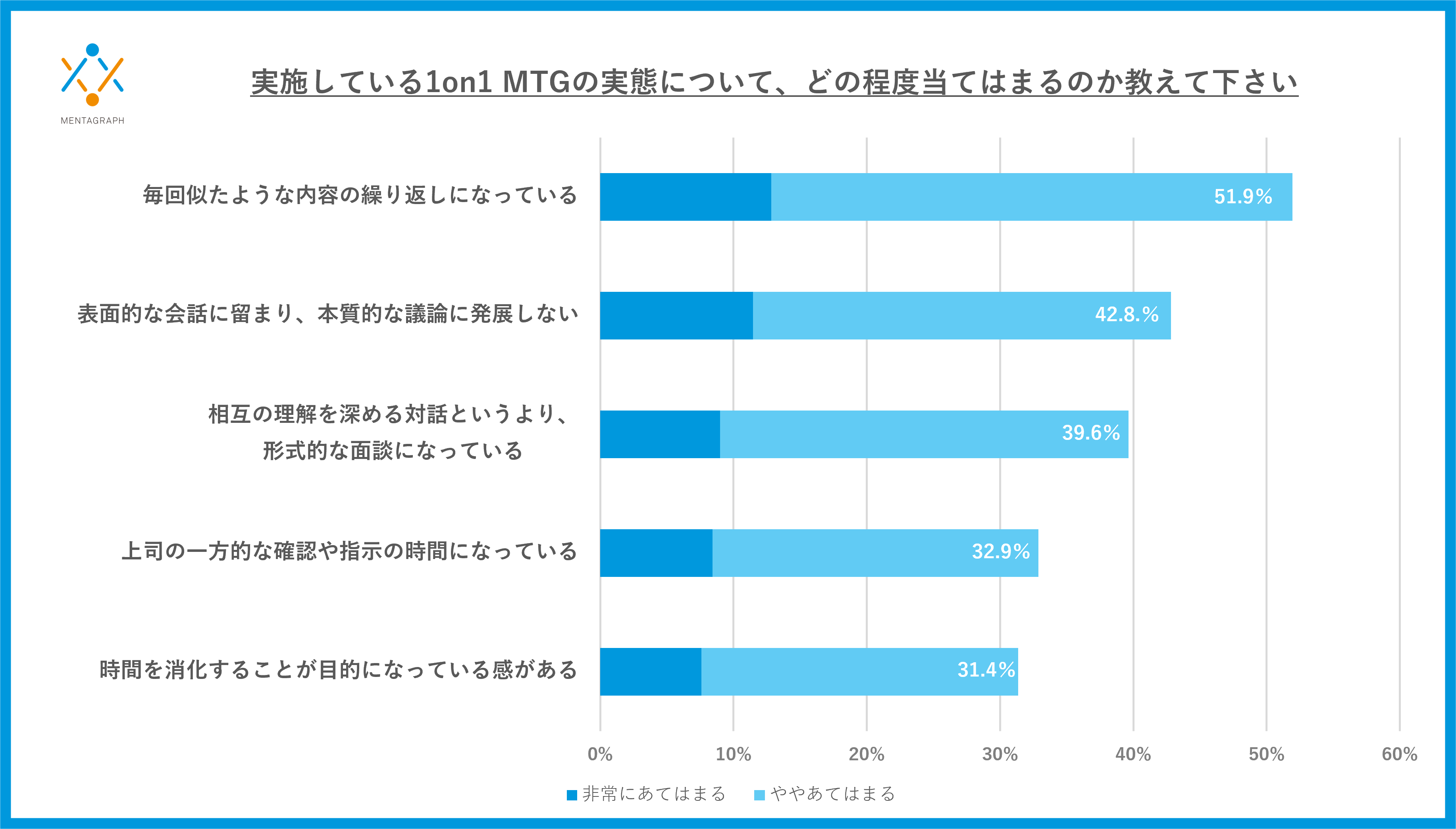
In a survey asking about the current state of 1-on-1 meetings, 51.9% of respondents answered that "the same content is repeated every time," and 42.8% answered that "it remains a superficial conversation and does not develop into substantive discussion." This suggests that while they are felt to be necessary, in reality, they have become stale and a mere formality. It appears that the purpose of holding meetings regularly has become the goal itself, with the content becoming secondary.
This survey revealed that while 1-on-1 meetings have become an established system and are felt to be necessary, there is a perception gap between superiors and subordinates regarding how they are perceived. In companies, aligning expectations and evaluation criteria between superiors and subordinates and updating the dialogue design to lead to results will help overcome the stale and formal nature of 1-on-1 meetings, leading to a sense of satisfaction and improved performance on the ground.
Survey Method: Online Questionnaire
Survey Period: December 3–17, 2024
Analysis Period: August 15–31, 2025
Survey Participants: 1,800 business people aged 22–65 (900 managers and 900 non-managerials)
About MENTAGRAPH, Inc.
MENTAGRAPH, Inc. is a B2B company that provides the "Mental Battery Service," which visualizes employees' mental states, promotes appropriate breaks throughout the workplace, and supports optimal management. Born from Japan Tobacco's (JT) corporate R&D organization, "D-LAB," the company promotes "mental care reform" by visualizing stress and fatigue, centered on "mental richness." Its flagship product, the "Mental Battery" service, comprises a wearable sensor called "mentoring," break recommendations via an app, and dashboard management of the organization's overall stress level. This service quantifies employee fatigue and stress in real time and visualizes appropriate break timing. It can be used by managers and HR personnel for organizational care. It achieves "continuous and highly accurate measurement," something traditional stress checks could not achieve, leading to improved employee satisfaction, work efficiency, and team performance. The company aims to create a society where "taking breaks" is a natural part of corporate culture.